2026-09-13 ·
How to Handle Construction Debris During Linden Winters
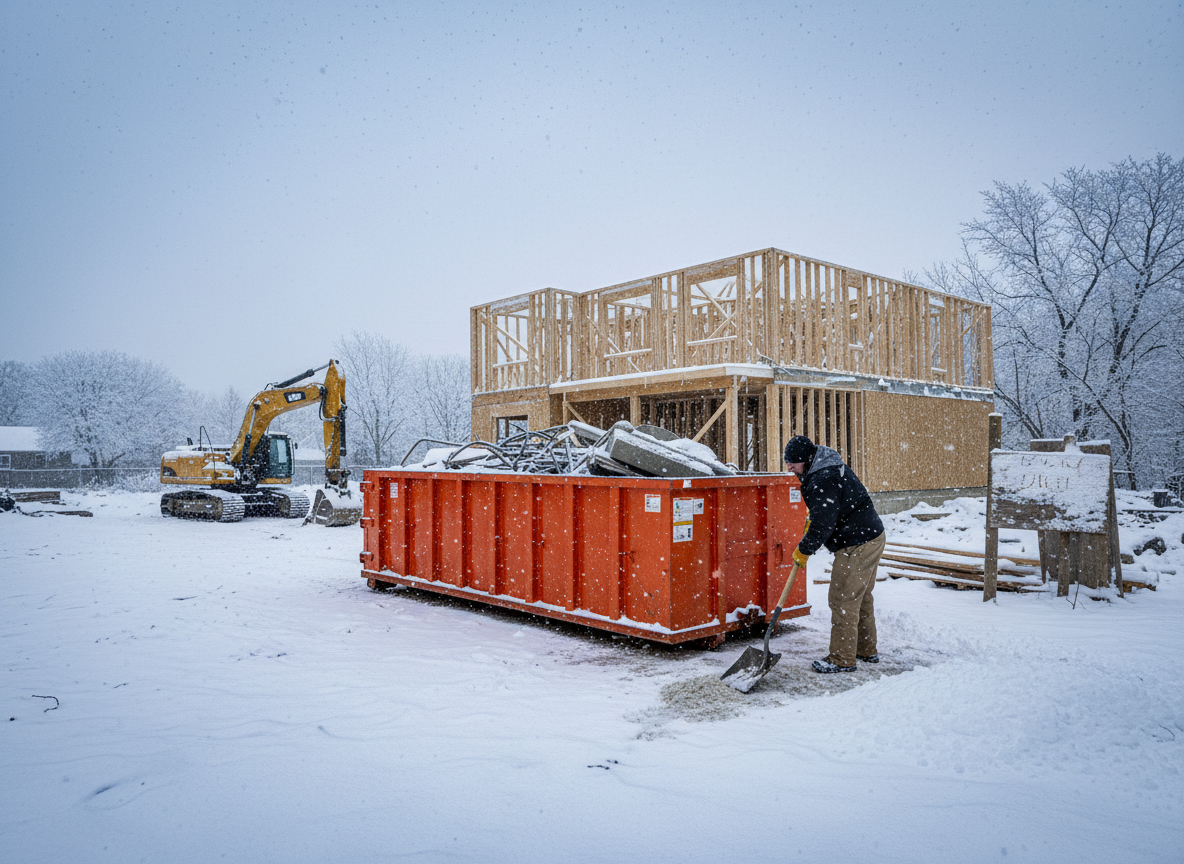
In Linden winters, handle construction debris by securing a construction dumpster rental sized for your project volume and placing it on a cleared, level spot with easy truck access even after snowfalls. This approach prevents frozen piles from blocking work and keeps materials contained through freeze-thaw cycles common in the Linden area. Planning ahead for snow removal around the unit and scheduling hauls before major storms reduces on-site hazards and keeps timelines intact.
Preparing the Site for Winter Access
Linden construction sites often sit on older residential lots with narrow driveways and sloped yards that collect drifting snow. Clear a path at least 10 feet wide to the dumpster location before delivery so the truck can back in without getting stuck. Spread gravel or salt on the approach after each snowfall to maintain traction for repeated visits. Check the ground for soft spots near septic fields or drainage ditches common in the Linden area, because a heavy loaded unit can sink once temperatures rise above freezing. Mark underground utilities before the first snow so winter crews avoid them when moving debris. These steps cut delays that otherwise stretch a two-week job into four when access is lost.
Selecting and Positioning the Right Container
Choose a construction dumpster rental with a low-profile design for easier loading of lumber, drywall, and concrete chunks when gloves and layers limit mobility. Position the unit on the windward side of the house so prevailing northwest winds do not fill it with snow between hauls. Keep the lid or tarp system closed each evening to stop meltwater from soaking insulation and wood scraps, which adds weight and can freeze solid by morning. In Linden neighborhoods with tight side yards, request a 10- or 15-yard container rather than a larger one that may overhang the driveway and collect drifting snow against the house foundation. Verify the rental includes weekend and holiday service since the provider operates Mon–Sun 24/7 and can swap units on short notice after a heavy snow.
Managing Frozen and Wet Debris
Construction debris left exposed in Linden winters quickly becomes a mix of frozen chunks and slush that is hard to separate for recycling or landfill sorting. Break up large frozen pieces with a sledge before they bind together, and store metal and wood scraps under a tarp inside the container to keep them workable. Separate concrete and brick early because wet mortar freezes and adds extra weight that raises hauling costs. If a sudden thaw turns the pile into mud, add absorbent material such as sawdust from the job site to improve handling. These habits prevent the container from exceeding weight limits during the next scheduled pickup and keep the site safer for crews walking on icy surfaces.
Timing Hauls and Adjusting for Weather
Monitor forecasts and request pickup before a predicted multi-day snow event so the driver can reach the site without chains or delays. The 24/7 schedule allows same-day swaps when a storm shifts the timeline. Track how much debris accumulates daily and call for an early haul if the container reaches three-quarters full, because additional snow load can push it over legal weight on the road. Coordinate with other trades on the job so roofing or framing waste does not sit through repeated freeze-thaw cycles that make materials brittle and harder to load. This steady rhythm keeps the project on schedule even when Linden winters deliver back-to-back storms.